

Wolf Game: The NFT Strategy World Built by Seedphrase
Wolf Game merges on-chain gaming, economics, and strategy in a blockchain ecosystem created by digital art collector and entrepreneur Seedphrase.
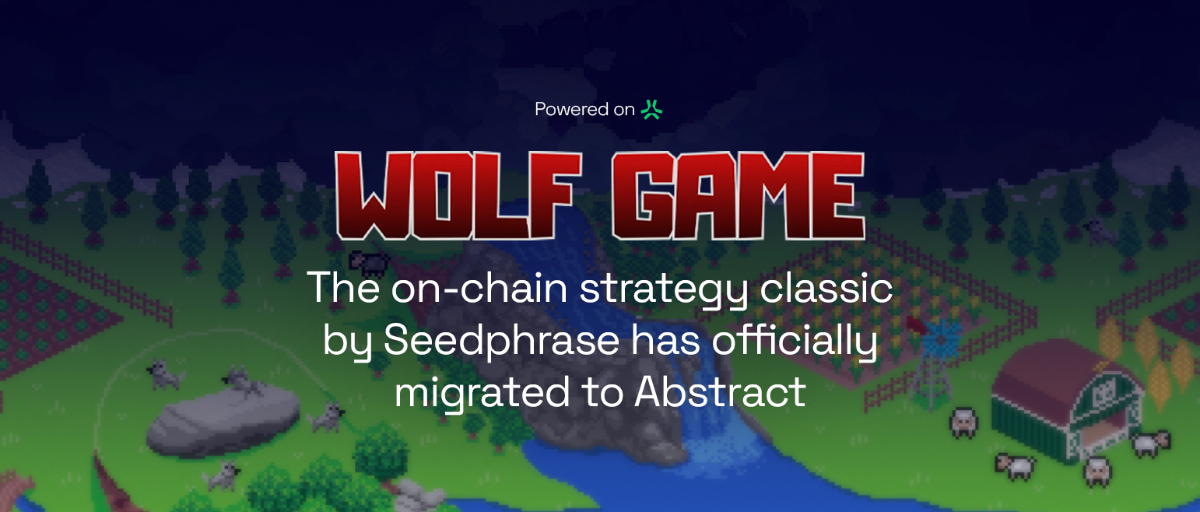
Wolf Game: The NFT Strategy World Built by Seedphrase
In the evolving world of Web3 gaming, few projects have had the cultural impact and mystique of Wolf Game, a blockchain-based strategy experience that blurs the line between gaming, tokenomics, and community storytelling.
Developed by seedphrase, a well-known NFT collector, investor, and builder, Wolf Game introduced an entirely new genre: on-chain social strategy, where risk, resource management, and cunning negotiation define success.
Since its debut, the project has attracted both devoted players and curious observers intrigued by its hybrid blend of DeFi mechanics, NFTs, and gamified economics.
Origins: The Vision of Seedphrase
Wolf Game was founded by Seedphrase, an early crypto adopter and prominent figure in the NFT scene. Known for his digital art collection and distinctive persona, Seedphrase is widely regarded as one of the early cultural architects of Web3’s creative economy.
His vision for Wolf Game emerged during the first major NFT boom, when collectors sought experiences that extended beyond ownership, toward interaction, strategy, and community-driven play.
“I wanted to build something that wasn’t just collectible, but alive,” Seedphrase once remarked.
Wolf Game launched with a mysterious premise and minimal explanation, instantly creating intrigue across Web3 circles.
What Is Wolf Game?
Wolf Game is a blockchain-based strategy game where players stake and trade NFTs representing wolves and sheep in a high-risk, high-reward ecosystem.
Each player chooses between two paths:
-
Sheep generate WOOL, the in-game currency, through passive yield.
-
Wolves can steal from others, or claim dominance by taking a share of the game’s resources.
This dynamic fosters a player-driven economy of risk, alliance, and deception, entirely built on smart contracts. No central authority controls the outcome; every move and transaction is recorded on-chain, making the game both transparent and unpredictable.
Wolf Game also shared their recent updates for the reopening of the Valley.
The Gameplay and Tokenomics of Wolfdotgame
The central currency of Wolf Game is $WOOL, which powers the in-game economy. Players use it to buy, stake, and upgrade assets, while also participating in broader strategic events orchestrated by the game’s evolving ecosystem.
Wolf Game’s brilliance lies in how it merges NFT ownership with real-time economics. Each action, whether to farm, risk, or steal, carries both gameplay and financial consequences, making it as much a psychological contest as a strategic one.
Over time, Wolf Game has expanded with new land NFTs, farming mechanics, and guild systems, allowing for deeper resource management and multiplayer coordination.
How to Play Wolf Game — Step-by-Step Guide
Wolf Game combines strategy, risk, and on-chain economics. Below is a simplified breakdown of how to start and play effectively.
1. Get a Wallet and Connect
Install a Web3 wallet such as MetaMask, fund it with a small amount of ETH, and connect to the Abstract network (Wolf Game is migrating there).
2. Bridge Funds to Abstract
Use the official bridge provided on the Wolf Game website to move a small amount of ETH to Abstract. You will use this for gas fees and in-game transactions.
3. Acquire a Game NFT
Purchase either a Sheep or a Wolf NFT from the official marketplace listed on the Wolf Game site.
-
🐑 Sheep: Earn yield (WOOL) passively.
-
🐺 Wolves: Earn by taxing or stealing from Sheep.
4. Get Some WOOL (Optional)
WOOL is the in-game token used for upgrades, fees, and certain strategic actions. You can acquire it on supported decentralized exchanges.
5. Stake Your NFT to Start Playing
Head to the game’s dashboard and stake your NFT:
-
Sheep go to the Barn or Farm.
-
Wolves go to the Pack.
Once staked, your NFT begins generating in-game activity and rewards.
6. Generate Yield (for Sheep Players)
Staked Sheep earn WOOL over time, visible in your player dashboard. This represents your in-game economic growth.
7. Understand the Risk (Wolves’ Advantage)
When Sheep claim or unstake, a percentage of their WOOL may be taxed or stolen by Wolves. Wolves share these earnings, creating a competitive balance between both roles.
8. Claim or Compound Your Earnings
You can:
-
Claim WOOL regularly (incurs tax risk but secures your rewards).
-
Leave it staked longer (fewer tax events but higher exposure to market changes).
9. Unstake with Caution
Unstaking Sheep can trigger a higher risk of theft or loss, as Wolves are designed to exploit these events. Only unstake when you’re confident about timing and rewards.
10. Use WOOL Strategically
Spend WOOL to:
-
Upgrade NFTs
-
Breed new Sheep or Wolves (when available)
-
Build or maintain Land/Farm assets
Strategic spending can improve your long-term returns.
11. Explore Land and Farming (Advanced)
Owning Land NFTs allows you to construct buildings, grow crops, and partner with other players for optimized yield. This adds a deeper resource management layer to the game.
12. Join a Guild or Community
Many players join guilds or packs on Discord or Telegram to coordinate moves, share insights, and optimize strategy. Team coordination often leads to better yield and reduced risk.
13. Monitor and Adjust
Keep track of:
-
WOOL earnings
-
Tax events
-
NFT market prices
Adjust your staking, claiming, and trading strategy based on evolving in-game and market conditions.
14. Stay Safe and Use Official Links
Always verify that you’re on:
-
✅ wolfdotgame
Avoid third-party sites or contracts to protect your assets.
Summary
Stake Sheep to passively earn WOOL (with tax risk from Wolves), or stake Wolves to collect taxes and rewards. Timing your claims and managing risk define your success in Wolf Game.
Cultural Significance and Design
What sets Wolf Game apart is not just its gameplay, but its aesthetic and narrative design. Its minimalist visuals and suspenseful, community-driven atmosphere mirror early crypto culture: experimental, competitive, and slightly anarchic.
Seedphrase and his team have cultivated a tone that feels both retro and futuristic, a decentralized world of trust, betrayal, and collective storytelling.
The game’s narrative became symbolic of early Web3 experimentation, often referenced as an example of how NFTs can create emergent economies and culture rather than just art collections.
Bridging to Abstract: A New Era for Wolf Game
Wolf Game is entering a new phase in its evolution by migrating to the Abstract blockchain, marking a significant step forward in on-chain gaming performance and scalability.
This transition allows the project to maintain its original identity, high-stakes strategy, economic depth, and community-driven gameplay, while benefiting from Abstract’s Layer 2 infrastructure built on Ethereum.
The move introduces key advantages:
-
⚙️ Lower transaction costs for in-game actions such as staking, breeding, or trading.
-
⚡ Faster processing speeds, powered by Abstract’s recent upgrade to 200ms block times, one of the fastest production speeds of any L2.
-
🧠 Improved scalability to support larger player bases and richer gameplay mechanics.
By leveraging Abstract’s architecture, Wolf Game can deliver real-time, low-latency gameplay without compromising Ethereum’s underlying security.
This migration also highlights a growing industry trend: on-chain games shifting toward high-speed, cost-efficient L2 networks that allow for deeper interactivity and economic design.
As Abstract continues to expand its ecosystem, now powering major DeFi protocols, NFT projects, and games, Wolf Game’s arrival underscores its potential to become the home of performance-based Web3 gaming.
“Merging its high-stakes origins with cutting-edge infrastructure,” the project notes on its website, “we’ll be migrating to a new chain soon.”
With this bridge, Wolf Game positions itself not just as a relic of early NFT gaming history, but as a living example of how blockchain games can evolve with technology, faster, cheaper, and more connected than ever before.
$BIG (bigcoin.tech) Collaboration Rumors
Recently, rumors have circulated of a collaboration between Wolf Game and bigcoin, one of Abstract’s emerging ecosystem projects.
According to community discussions, players holding certain cosmetic items in bigcoin may eventually receive special in-game benefits within Wolf Game. While unconfirmed, these rumors have fueled speculation about cross-project interoperability, a step toward connecting on-chain games within a shared ecosystem.
Such collaborations could reinforce a broader Web3 vision where assets, cosmetics, and identities move freely across multiple games and blockchains.
Why Play Wolf Game?
For players, Wolf Game offers more than entertainment, it’s an experiment in strategy, risk, and social psychology. You don’t just play against others; you play with them, building alliances, staking assets, and making decisions with real consequences.
It’s a mix of:
-
🎮 Game theory and risk management
-
💰 DeFi-inspired rewards and yield mechanics
-
🧠 Community-driven storytelling and lore
Players are drawn not only by the potential to earn, but by the thrill of survival in an ecosystem designed for the bold.
Conclusion
Wolf Game represents one of Web3’s earliest and most enduring experiments in blending ownership, play, and community dynamics.
Driven by the creative vision of Seedphrase, it remains both a nostalgic reminder of early NFT innovation and a continuing blueprint for decentralized gaming.
As new partnerships and rumors emerge, including potential connections to BigCoin, Wolf Game continues to evolve, proving that in this metaverse, the pack still runs wild.
Project Links
-
🐺 Official Website: wolf.game
-
🐦 Twitter (X): wolfdotgame
-
👤 Founder: seedphrase
-
⛵️ OpenSea: NFT Collection Wolf Game