

Kona's Whisker: a deterministic game engine built to make GameFi outcomes provable
Abstract DeFi protocol Kona (@KonaDeFi) has unveiled Whisker, a game engine it built to make GameFi outcomes provable — simulation-first, with commit-reveal randomness and $KONA as the per-outcome 'toll.' The deterministic core is live for the upcoming Kona Kitty game; the settlement and verification layers are still being built.
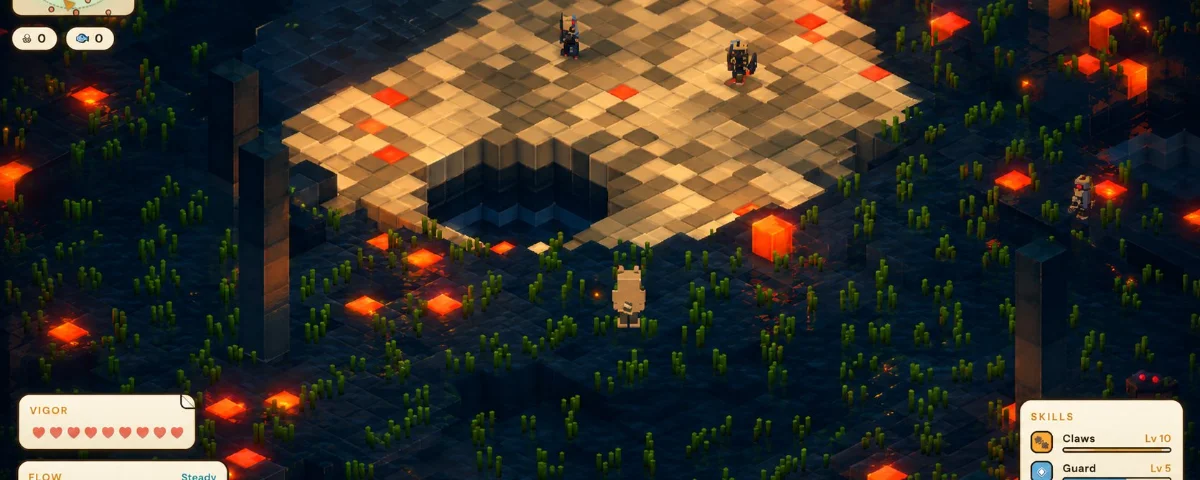
Abstract DeFi protocol Kona (konadefi) — built by KittyPunch (kittypunchxyz) — has unveiled Whisker, a game engine it wrote from scratch to make GameFi outcomes provable. In a long-form post, the team frames the decision plainly: "We built our own game engine, which is not something I'd recommend to anyone who has a choice. We did it because the games we actually want to make can't be made provable on the engines that already exist."
This piece walks through what Kona says Whisker is, how its fairness model works, where the native $KONA token fits — and, importantly, what is live today versus what is still being built.
The problem: trust, once an outcome is worth money
Kona's premise is that GameFi never really solved trust. "The moment a game outcome is worth money, everyone involved has a reason to bend it," the team writes — the player chasing a rare drop, the operator wanting an edge, and "above all whoever runs the server, who can do more or less whatever they want and ask you to take their word for it." Taking the server's word for it, Kona argues, is exactly what crypto was supposed to make unnecessary.
Simulation-first, not graphics-first
Most engines, Kona notes, are built around graphics first, with the rules layered on top afterward. Whisker is built the other way around — "with the simulation at the center, so the world behaves the same way every time no matter who runs it or where." That property is determinism: given the same starting conditions and the same inputs, the engine produces the same result every time it runs on the same version and ruleset. The payoff, per Kona, is that "every drop, every fight, and every cast of a line is something you can replay and check rather than something you take on faith."
How the randomness works
Games need chance — loot tables, critical hits, which fish bites, what's in the chest — and Kona is careful to spell out how Whisker generates it. Determinism alone isn't enough, the team says: "A reproducible roll is only honest if the seed behind it wasn't hand-picked." So Whisker uses a commit-reveal scheme — the seed is "locked in with a public commitment before you act, your own inputs feed into it, and the seed itself is revealed afterward for anyone to check against that commitment."
Because the seed is committed before play, "nobody, including us, can sit there rolling candidate seeds until one pays out," Kona writes. Once set, the roll resolves the same way on every replay, so anyone can re-run the sequence and confirm the result: "The chest is a real surprise when you open it and a verifiable fact to anyone who checks it later."
The bet: off-chain speed, on-chain settlement
The design splits the difference between fully-onchain games and conventional ones. Fully onchain projects "solved fairness by putting the entire game on the blockchain, which works but locks them into slow, turn-based play." Whisker instead "runs the game at full speed off-chain and anchors only the outcomes that carry value back to the chain."
Kona's example: "A thousand sword swings cost nothing and don't need proving on their own. The boss kill that pays out is the thing that gets settled and verified." The stated goal is to avoid choosing between fun and fairness — the game plays at the speed of a game, while "the moments that matter are the ones that have to hold up." Because the simulation is kept separate from rendering, Kona says it can swap the renderer without rebuilding the underlying logic.
Where $KONA fits
This is where the token enters. Because Whisker produces "discrete, verifiable outcomes," Kona argues the engine can charge a fee against each one "precisely and trustlessly" — something most game economies can't do "because their games can't prove an outcome even happened."
So, in Kona's framing, $KONA is "the toll the engine charges for the work it does." Every value-bearing action pays a fee in $KONA, a portion of every fee is burned, and holding the token is required to play — while you play, it "sits locked in escrow and out of circulation." (For background on $KONA's existing role in Kona's DeFi product, see our earlier explainer, Kona DeFi on Abstract: Trading, Yield and KONA Token Explained.) The team is pointed about the contrast with emissions-driven models: "All of that demand comes from people doing something they actually want to do, not from emissions we printed to prop up a chart... There is no infinite faucet here. The fees are real because the play is real."
Kona frames the token's role as deepening over time rather than arriving all at once: on day one it is "simply the currency of the game," but as the settlement and verification rails come online it becomes "something the engine itself can't operate without."
What's live, and what isn't yet
Kona is unusually direct about the gap between today and the pitch — a distinction worth preserving. The deterministic core "is already live for our upcoming Kona Kitty gameplay: simulation-first, fixed-step, seeded, and replay-tested." But the commitment-based settlement and verification layers are "what we're building around that core now." In the team's own words: "read what follows as where this is headed, on a foundation that already runs." Put plainly: the engine runs and is deterministic today; the on-chain commit-reveal settlement that would make outcomes publicly verifiable is still in development.
The wider Kona picture
Whisker lands during an active stretch for Kona. The team says 1,000 Kona Kitties have been minted — 20% of supply — and that its stablecoin lending markets are "providing upwards to 37% APY" (both self-reported). On the token side, Kona reports 420 $KONA burned to date by users converting Kona Points into its ecosystem token $PEARL, and says one project, Litany, has adopted $PEARL as a utility token — claims sourced to Kona's own posts.
KittyPunch, the team behind Kona, has shipped on Abstract before; we covered its earlier launch in KittyPunch/Kona Launches: Froth.meme Turns Failed Tokens into Winners.
Whisker is the foundation the rest of that ecosystem is meant to run on. "The first game is where you'll see it work, with real outcomes you can verify yourself," Kona writes — pointing to Kona Kitty as the first test of whether the engine delivers on its provability claim.
Based on Kona's (konadefi) public long-form post introducing Whisker, plus the team's related posts on X. Token metrics (Kona Kitty mints, lending APY, $KONA burned, $PEARL adoption) are self-reported by Kona and attributed as such; per the team, the commit-reveal settlement and verification layers are still in development.