

10 Red Flags for Token Rug Pulls: Lessons from a Honeypot Scam
A new rug pull on Abstract blockchain highlights just how sophisticated scams have become. Here’s what every crypto community member needs to watch for.
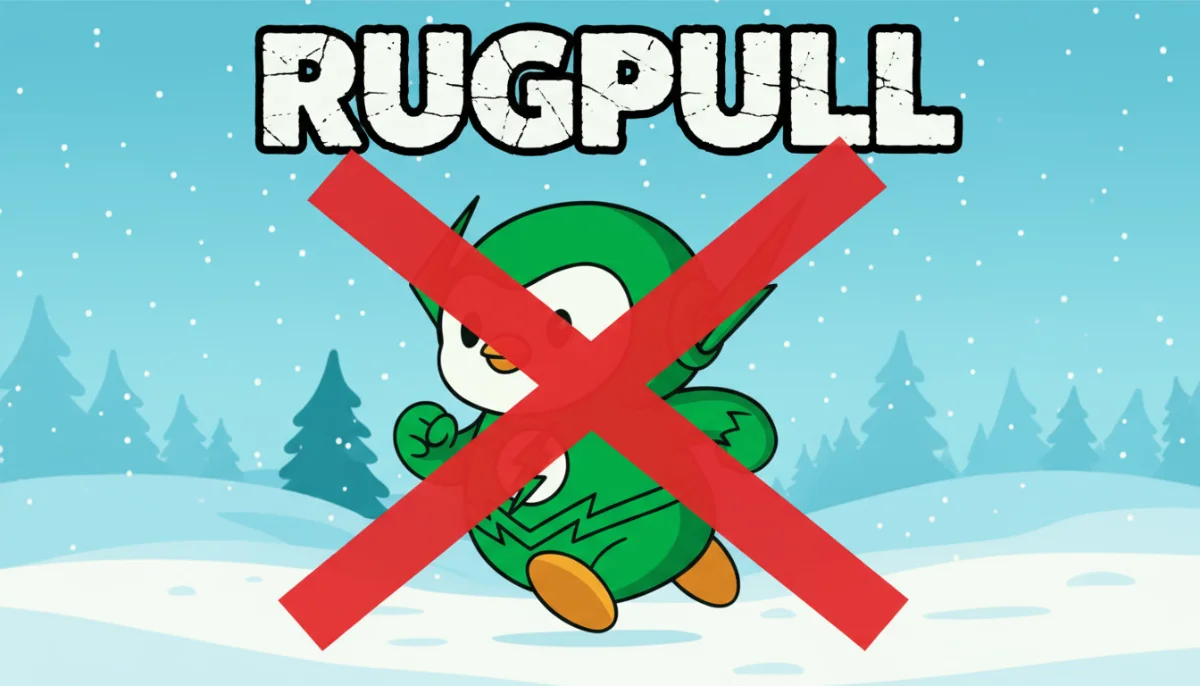
10 Red Flags for Token Rug Pulls: Lessons From the Latest Scam on Abstract
Despite Abstract being a chain built with consumer experience in mind, you still have to watch out for all the same risks—this is still Web3 at its core.
Nearly every week, Abstract blockchain’s ecosystem brings new tokens and wild volatility—but sometimes the learning isn’t cheap. About 13 hours after bonding, the “Faster” token played out the classic honeypot rug pull: a rush of initial trades, a glossy site, then the classic drain-the-liquidity exit.
As a developer and trader who loves Web3’s energy (but values hard truth), here’s the honest checklist I’d share with all new community members—because making it here is a marathon, not a FOMO sprint.
All findings below are based on direct blockchain data, DexScreener records, and first-hand community analysis. Don’t just take anyone’s word for it; always double check the sources for yourself.
1. Copy-Paste Websites
If a token’s site looks like it was assembled from the usual template—sections like "How to Buy," "Roadmap," "Tokenomics"—but nothing unique, that’s a huge warning sign. These days, AI tools can spin up a slick site in under an hour if you feed them the right prompt and a list of buzzwords. Polishing a landing page takes barely any human effort. What does take effort is actually building a brand or product around that landing page—almost nobody fakes that.
My take: Don’t let generic UI and marketing copy fool you; ask: what really separates this project from a thousand copycats? If the answer is not clear, you’re looking at a red flag.
2. Hype Without Proof of Community
Giant green candles and “holy grail” charts on day one almost never lead to healthy, sustainable projects. If the token isn’t being discussed widely or organically, or if the Abstract team hasn’t even hinted at it (jk 💀💀) , that’s not “undervalued alpha” — it’s groundwork for exit liquidity.
Personal experience: As a developer who tracks launches on DexScreener, I’ve seen coins skyrocket on zero actual community. If nobody’s talking about it on X (Twitter), or if the Discord is a ghost town except bots and “shillers,” be careful. That initial pump is precisely what lures smart people into FOMO’ing. Don’t be that person left holding the bag.
3. Flashy Websites Are Now a Trap
Five years ago, a great-looking homepage was impressive. Now, it can hide emptiness. If a token’s website is all parallax images and animations but light on what they’re really building (if anything), that’s a negative—not a plus.
How I see it: Maintaining beautiful front-ends with no back end substance is a huge drain; real builders focus on code and product first. If everything feels “too new” and polished, it’s worth asking whether the devs are more interested in selling you an image than a real project.
Companies earn polish after their communities were built, not before (like Igloo Inc.).
4. No Business Model or Cohesive Vision
Here’s the blunt reality: meme coins can win with pure community-driven entertainment or wild viral adoption. But if there’s zero sign of a route to growth, recurring value, or any utility outside “lets moon,” alarm bells should blare.
Caution: If you can’t see even a guess at how they’ll fund future work (other than dumping tokens on new buyers), then they’re telling you their only business plan is exit liquidity. Don’t confuse hype for a business—look for roadmaps with substance, even if it’s just a strong meme and well-run Discord.
5. Market Cap and the Layered Rubric
This is one of my favorite sanity checks: compare new tokens to heavyweights in the Abstract ecosystem. If Abster, the chain’s mascot, sits at a $20M cap with real reach and another token’s trying to pump to $5M overnight with no community and only vapor, be real with your expectations. Use “blue chips” as your calibration.
Personal method: When evaluating, list the top meme coins on Abstract and ask how your new find stacks up. If a new coin draws a higher MC than established projects, yet there’s no cultural impact, just walk away.
6. AI-Generated Mascots and Art
Scam tokens today often use AI art to make their sites and social feel “deep.” 10–20 mascot pics used to mean they’d invested hundreds of dollars; in 2025, it’s just one prompt and a free AI credits trial.
Seasoned view: Unless you see clear investment in unique branding (beyond AI randomness), don’t be impressed by image variety alone. Ask—does the mascot appear anywhere outside their landing page? If not, it’s usually aesthetic dust thrown in your face to cover a lack of core value.
7. Community Momentum: Numbers Tell a Story
Token communities are built, then buyers arrive. If a new project like “Flash” has no viral clips, Twitter memes, or organic builder engagement in the first few days, that’s a red flag.
Traders’ tip: ‘Wait for the noise’ is good advice. If a project doesn’t already have die-hards before big trades hit the chart, odds are the “community” is vapor, maybe even bots. Never confuse noise for genuine traction; always check the project’s creative activity across social channels.
8. The Green Candle Fallacy
Big volume, big pumps, and buy walls can all be faked or cross-traded by insiders. When “Faster” yanked its liquidity (19 WETH gone in the blink of an eye), much of that movement was just insiders cycling tokens, spooking FOMOers into providing real exit liquidity.
Inside baseball: Generally safe to assume buys aren’t real unless backed by real visible community activity elsewhere. Watch for repeated wallet addresses, circular trading, and unusually timed green candles—these are seasoned rug strategies now.
9. Never Risk More Than You Can Lose
A cliché, but essential: just because the technology is new doesn’t mean risk should be. Emotional detachment creates better decisions. The only way to trade well is to care less about each trade—never overexpose or think you must “time the market.” Earn outside, dollar-cost-average into conviction plays, and remember: slow is smooth, smooth is fast.
Mentality hack: The people who survive cycles in Web3 are those who focus on risk control, not hero plays. Being patient and conservative often leaves you as the last man standing when a cycle changes.
10. If You Don’t Play, You Don’t Lose
Trading is not basketball, passing up a trade should not be thought of as a missed opportunity. Not every meme coin is a scam—I hold some myself—but if you jump into every new token, you’re just asking to get rekt. More participation = more exposure.
My approach: I only hold coins where price action downward wouldn’t stress me out. Let your comfort level and due diligence drive every entry. It’s not about “catching the next 100x” but choosing projects you’d feel fine holding despite what happens in the next few months.
Conclusion: The Real Hard Work Is Community and Value
Abstract’s ecosystem is only going to get more competitive and noisy from here. While tools like AI make it easier to launch, it hasn’t changed the rules: rug pulls prey on hope and hype, but real winners play the long game.
Never feel ashamed to wait, question, or say no. The next opportunity will come. Capital is only useful if it’s still yours next cycle.
FAQ
Q: What is a rug pull?
A: A rug pull is when token deployers drain liquidity and exit, leaving buyers with worthless tokens.
Q: Do only new projects rug?
A: Sadly, no. Any project can fall victim to bad actors if control is too concentrated, the team is anonymous, or the roadmap is just smoke.
Q: How can I check if a new meme coin is safe?
A: Review contract code, wallet distribution, site originality, and social engagement. Cross-check everything on explorers; trust, but always verify.
Q: What matters more, code or community?
A: They’re equally critical. Also it's what the code does. For meme tokens - fancy front-ends means almost nothing imo rather - strong, legitimate community momentum is usually the difference maker.
Q: Are there safe meme coins?
A: There are coins with strong communities and better governance—look for projects with open teams, distributed token holdings, and active channels. Still, only invest what you’re happy to lose.
This content is based on direct chain data, Abstract ecosystem activity, and trading experience. Always check chain sources and don’t rely on newsletters—be your own last line of defense.