

Base's week: a stock-backed credit card and FalconX credit
Exa launched a credit card backed by Coinbase tokenized stocks on Oct. 29, the same day Base said FalconX's USDC credit facility is live on Base.
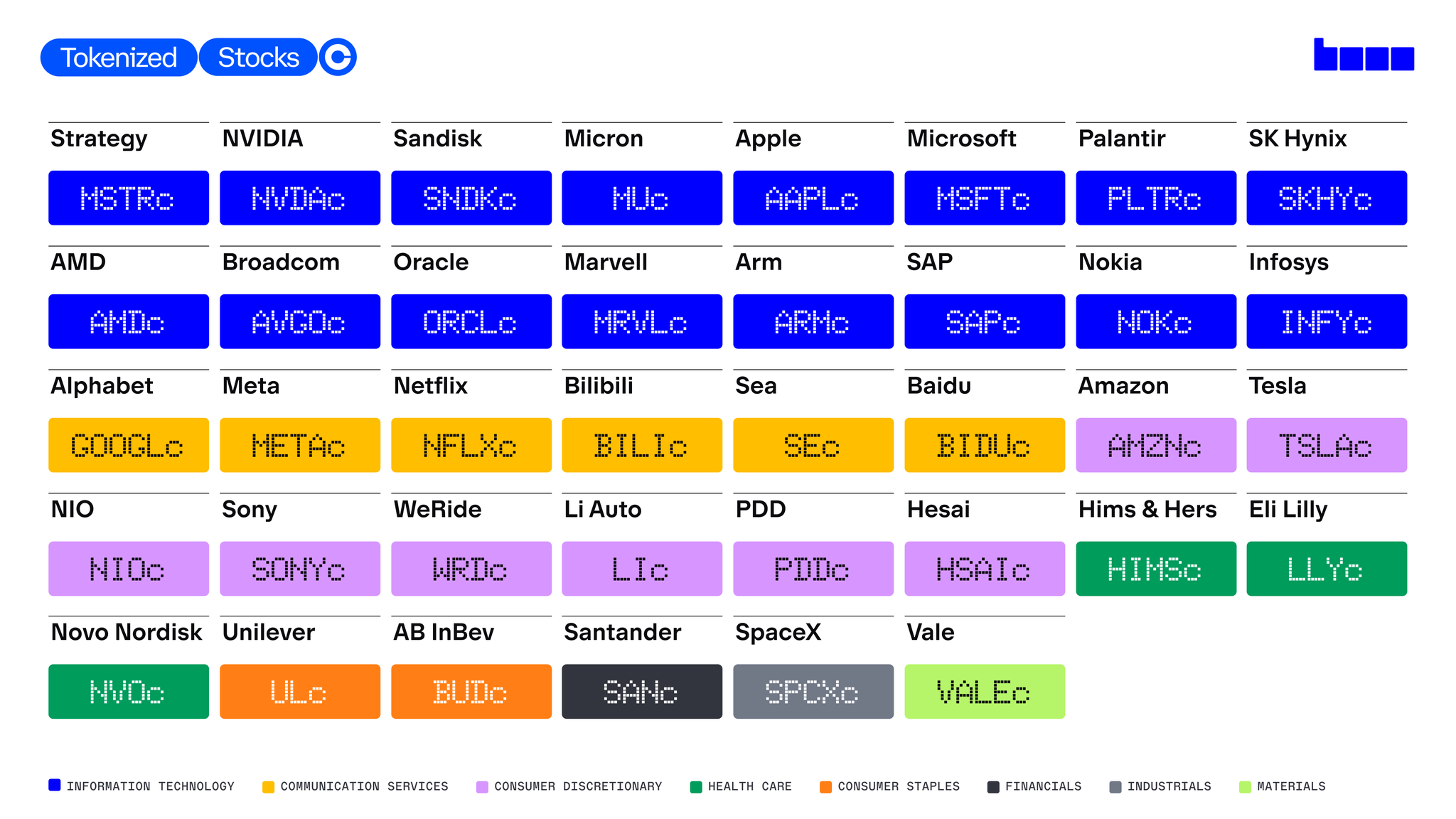
Exa, a crypto-card and credit app, said on Oct. 29 that the first credit card backed by Coinbase tokenized stocks is live on Exa Blue, its Base web version. Hours earlier, Base announced that FalconX's USDC credit facility is live on Base, under the line "Institutional credit is moving onchain." One lends to card users against collateral; the other takes USDC deposits to fund institutional credit. Exa is not the company that issues the stocks it accepts as collateral.
Our last roll-up covered the 24/7 stock trading, stablecoin rails and 200ms blocks of the previous two weeks. This week's items are the credit products that followed.
A card that borrows against stocks
Exa's own post calls the product "the world's first credit card backed by Coinbase tokenized stocks" and says it is live exclusively on Exa Blue, with a release in the Exa app still to come. Gabriel Gruber described it as an onchain credit card "that lets you use your Coinbase tokenized stocks as collateral to buy now and pay later in fixed-rate installments." Screenshots attached to Exa's post show a Collateral tab listing ETH, USDC, AMZNc, AAPLc, GOOGLc, NVDAc, METAc and cbBTC, a pay-mode toggle set to "Later in 9," and a $13.35 credit limit against $18.30 of collateral. That is one account's screenshots, not published terms. The Exa Blue site says purchases can be split into up to 9 fixed-rate installments. The screenshots also show APR figures on individual balances, which we cannot tie to a borrowing rate. We found no stated collateral ratio or official accepted-stock list in the posts. Those are the open items for anyone weighing it.
The collateral is issued by Coinbase. Base's stocks page describes the tokens as individual US company shares issued by Coinbase and backed 1:1 by shares held in regulated custody, available only in eligible jurisdictions outside the US. Exa builds on top of that issuance. It does not issue anything itself in these posts. Our guide to borrowing against tokenized stocks covers the lending mechanics in general, and our guides to Pendle yield markets and PendleLoop cover two other uses of the same tokens.
The collateral keeps trading
Token Terminal posted on Oct. 29 that Coinbase-issued tokenized stocks on Base reached $4B in cumulative DEX trading volume. NVDAc leads with $641.4M, followed by METAc at $552.5M and MSTRc at $513.7M. The post says daily trading volume "now regularly exceeds $100M," Token Terminal's wording. The $4B is a running total since the tokens launched, not a weekly figure, and Token Terminal's post is the only source for it here.
On the retail side, Hey said on Oct. 28 that 218 tokenized stocks are available on Base through Hey, with 0% fees. That is the count of what one app offers, not a total for Base.
On Oct. 9, Jesse Pollak posted a chart captioned "4→40→250 stocks on base this month." The slide in the post reads "250 by the end of October, from 4 at launch on Aug 24," a stated expectation. We found no month-end count published by Base or Coinbase, so how close the listing pace came to that number is unconfirmed.
Institutional credit, three parties
FalconX's own announcement says its Structured Credit Facility is expanding to Base, so lenders can deposit native Base USDC directly into the facility. It names M11 Credit as curator and says the facility is deployed on Pareto. Pareto's post says the vault has attracted "$180m+ in deposits" on Ethereum and that the Base expansion follows "the institutional capital that continues to flow onto Base." That $180M+ figure is for the Ethereum vault, not for Base.
TokenPost reported on Oct. 29 that the existing vault launched in March 2025 and held about $168M in total value locked as of Aug. 31, 2026, and that FalconX originates the loans while M11 Credit curates and Pareto provides the infrastructure. It also says the announcement did not confirm whether the same terms apply on Base, and that yield, minimum deposit, eligibility, fees and withdrawal schedule for Base were not disclosed. TokenPost gives no TVL for the Base deployment.
FalconX's explainer on the vault, dated June 24, 2026, describes monthly deposit and redemption cycles and a lending counterparty that is a special-purpose vehicle, with FalconX as the borrower. It names Monad as the chain of an earlier expansion and does not mention Base. Whether Base follows the monthly cycle has not been published.
Card volume and checkout
Paymentscan posted on Oct. 29 that card volume settled on Base hit a record $236.6M in October with three days still to go, up 84.2% from March. The chart breaks volume out by program, with the Wirex and Rain groupings largest, followed by Karta, Coca, KAST, Kolo and Bitget Wallet, through Oct. 28. The definition of "card volume" is not stated.
The same day, base posted about the Commerce Payments Protocol, which it says Shopify and Coinbase built on Base for accepting stablecoins as a payment method. The post's image reads "$42M+ payments settled across the Commerce Payments Protocol," a figure Base attributes to the protocol and we could not check independently. The protocol itself is not new: Base announced it on June 12, 2025.
What is next
The nearest dated item is the Denim upgrade. Base's builder account said on Oct. 29 that Denim is live on Base Sepolia with mainnet coming Nov. 5, then followed with a post saying Base moves to 200ms blocks with Denim on Nov. 5 and listing three things builders should know before activation. The image in that post names them: block counts used as time; Flashblocks and the "pending" tag; and indexers and block-count math. Base's docs list Sepolia as live since Oct. 21. Our Denim guide covers what changes.
Three things would show how far the credit thread runs:
- Exa terms. A stated borrowing rate, an official accepted-stock list and a published collateral ratio would size the card beyond one screenshot.
- FalconX terms on Base. Yield, minimums, eligibility and a Base deposit figure, from FalconX or Pareto.
- A month-end stock count. A number from Base or Coinbase to set against the 250 in Pollak's Oct. 9 caption.
Full signal history for the network is on its entity page.