

Bigtoshi Pivots to a New Token — Bigcoin Team Says "No Affiliation"
The team that inherited Bigcoin from its pseudonymous founder posted a pinned notice disavowing his new token on July 10 — the same day BIG hit an all-time low.
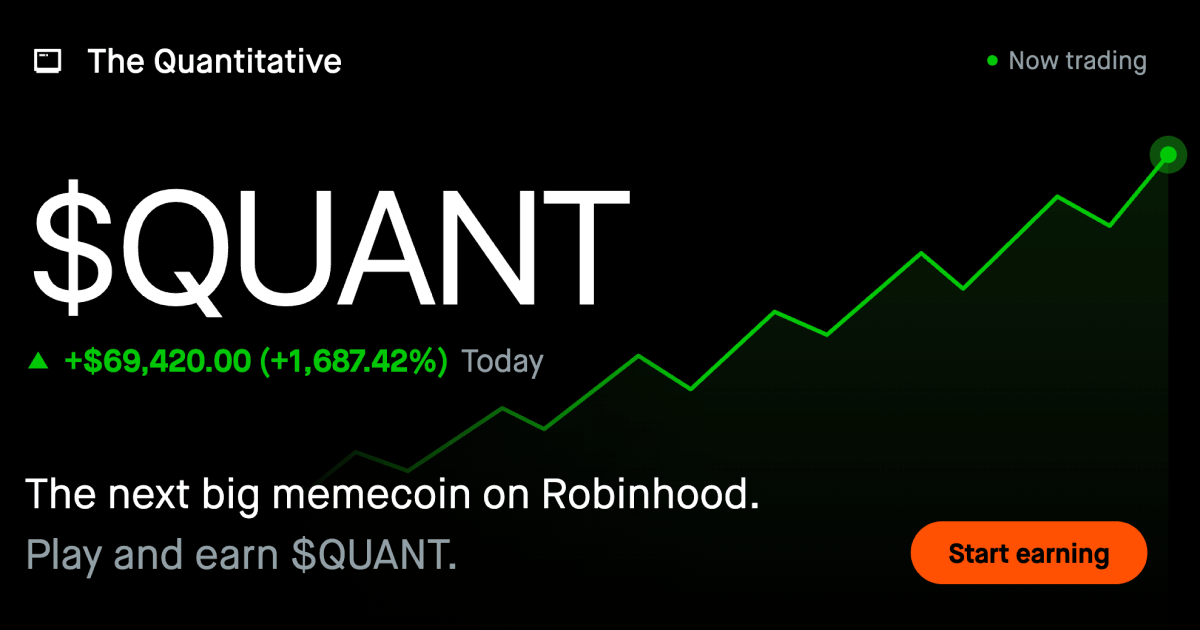
Bigtoshi, the pseudonymous creator of Bigcoin, resurfaced on X on July 10 to launch a project that has nothing to do with the game that made him known — and hours earlier, the team now running Bigcoin had publicly disavowed him. Bigtoshi posted a one-line warning, "Play at your own risk," linking to playquant.fun. In a pinned post the same day, @bigcoinmining stated: "Bigcoin has no affiliation with Bigtoshi."
The Bigcoin backstory
Bigtoshi built Bigcoin as an homage to Bitcoin: a fixed-supply, onchain "mining" game on Abstract with a 21 million $BIG hard cap and rewards halving every 4.2 million blocks, according to Bigcoin's own docs. It went viral on launch — cumulative users approached 70,000 near its April 2025 peak, Blockworks reported — before BIG fell 93% from its April 11 high and new signups slowed to under 40 a day by June. Parts of the community had already called the mining model a Ponzi scheme, Blockworks reported, pointing to how early miners were rewarded far more than late entrants. Bigtoshi stepped back from day-to-day control last year — Descout covered his return to X after that handover in November — and, by the new team's own account, they "inherited a project that had seen significant success but was struggling to remain sustainable," without taking over his original X account.
The team's account: audited, but never shipped
The new operators' plan, by their own telling, was "Merge Mining" — evolving Bigcoin into a token launchpad with sniper-protected launches, miners able to switch between mining different tokens, and vetted launch partners. They converted cosmetics and miners into NFTs, ran collaboration seasons, and say Merge Mining "was successfully completed on October 21, 2025" after "multiple audits" by an outside security firm. It never launched to users. "By the time development was finished, market conditions on the chain had deteriorated significantly," the team wrote; they offered a $10,000 referral bounty for launch teams and met builders, but "the market continued to weaken." The team says it's "continuing to evaluate the best path forward" and still believes in the model. Its stated reason for going public now: so the community "understands that any launches or announcements made outside of this account are not affiliated with Bigcoin" — a pointed, unnamed reference to Bigtoshi's new token.
Bigcoin's launchpad was not the only one in the works. Around the same stretch late last year — shortly after the Bigcoin team says Merge Mining was completed and audited — community accounts describe another Abstract project, Aborean, building its own token launchpad, the Aborean Forge. Descout has not independently verified that timeline. The broader picture the two efforts sketch is not really in dispute, though: while Bigcoin's audited launchpad sat unshipped, at least one other Abstract launchpad was moving in parallel, and an ecosystem carrying more than one at once did not clearly help either.
What The Quantitative is
The new project, The Quantitative, is an idle trading simulator running on Robinhood Chain rather than Abstract. Players "build a trading floor, hire traders into desks, claim the QUANT they earn, and decide whether to reinvest or withdraw," according to the game's own docs, which describe the payout as a stake in "Robinhood Chain's newest, biggest memecoin." Entry costs 0.01 ETH, and the site advertises earning up to 50,000 $QUANT a day through play, distributed via what it calls a "$QUANT Initial Game Offering" — supply released through gameplay rather than unlocked in one block on day one.
Bigtoshi's own framing
Bigtoshi addressed the comparison to Bigcoin directly, though not the team's statement itself. Replying to a follower who asked whether old Bigcoin miners would be rewarded, he wrote: "Who said Bigcoin supporters wouldn't be rewarded? It still baffles me it went to 180m with structural flaws. I'm curious to see what will happen with these flaws fixed and a chain that has more liquidity." That is his own account of what went wrong and what The Quantitative is meant to fix — not an independently confirmed figure or diagnosis, and not a commitment to reward past Bigcoin miners. His framing that Bigcoin's design was flawed sits uneasily against a team that has spent months telling its community a revival is still possible.
A split reception
The reply thread ran hot within hours. @lorenzo_onx, an Abstract community figure, wrote "Damn this website looks like ass." Days earlier, @AltOnChain had asked him, "Why would anyone play your new game with what happened with the last one you made? You should at the very least reward your old supporters of Bigcoin." @JonahBlake wrote, "dog what is this wheres the game?" and @FlippingProfits told him to "stop selling and dont rug me." A competing Robinhood Chain token's own account, @robinhoodfloor, replied "The Floor grows stronger here." Some replies voiced distrust beyond the pile-on; hours later Bigtoshi posted that he had "spoken to the $QUANT" and it had "been handled," linking a transaction on Robinhood Chain's block explorer without detailing what the issue was.
What's still open
Bigcoin itself is still running — miners can still log into their rooms and collect rewards — but BIG hit a new all-time low of $0.0268 on July 10, CoinGecko data shows, the same day both the disavowal and The Quantitative's launch tweet went out. Neither side has resolved the question hanging over both projects: like Bitcoin, a token needs real demand and utility to hold value, and neither Bigcoin's stalled launchpad nor The Quantitative's first days of trading have answered that yet.