

Inside Cambria's Player-First Economy: When Web3 Gaming Gets Guild Culture Right
Cambria and Ronin are redefining web3 gaming by supporting guilds like Ratos, where true culture, community onboarding, and rewarding gameplay build lasting value for every player and the ecosystem.
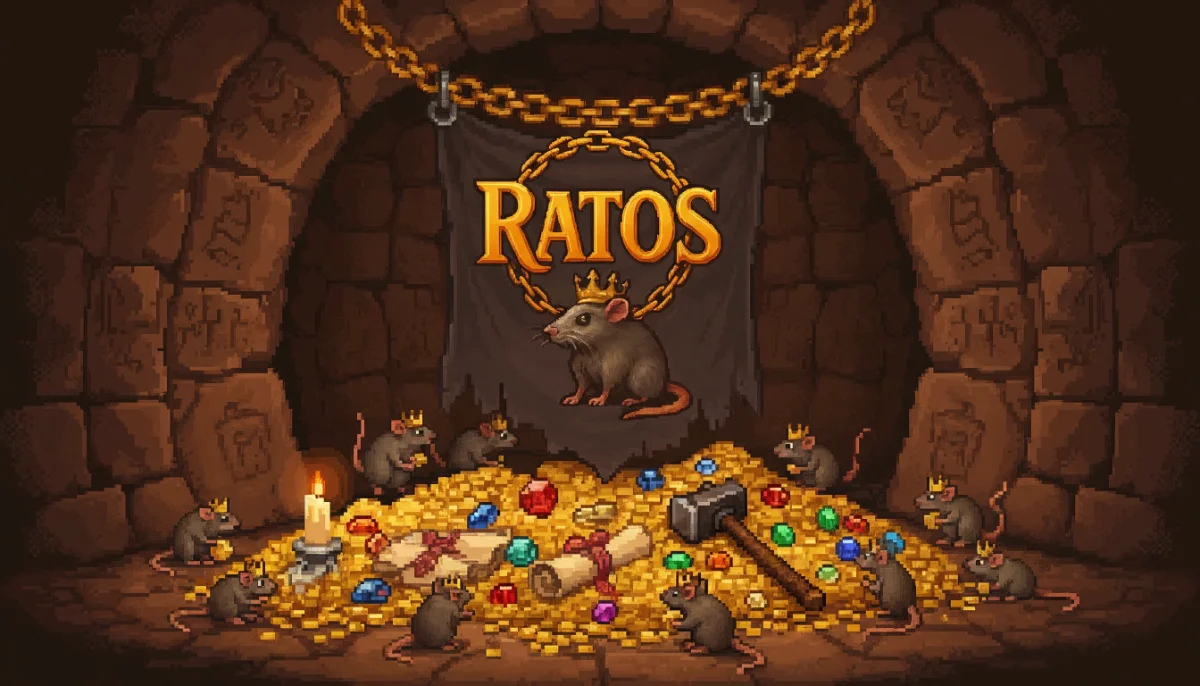
In July 2025, something unusual happened in web3 gaming: a guild leader asked for a grant publicly on Twitter, and one of crypto gaming's most respected builders responded within hours. Not with a transactional sponsorship deal, but with genuine support for onboarding web2 gamers into web3.
This wasn't just another funding announcement. It showed that Cambria and Ronin are genuinely committed to supporting the people and guilds who shape their growing game worlds, putting community and real teamwork front and center.
The Economics of Community-Led Growth
FabledMelon, leader of the Ratos guild in Cambria, runs a 6,000-member Discord focused on Old School Runescape, a community built over years teaching players the intricacies of merchanting, flipping, and game economy. These aren't crypto natives hunting airdrops. They're gamers who've spent 20+ years in MMOs with deep experience in game strategy, economy, and coordination.
When Jihoz, co-founder of Axie Infinity and one of the co-founders of Ronin, responded with "you have my attention" and "let's do it, i'd love to subsidize the onboarding of the osr discord," it validated what makes web3 gaming special: authentic community leaders deserve support, and that support creates sustainable growth. It is as generous as it is intelligent: investing in passionate community builders who genuinely care about player experience yields better outcomes than traditional user acquisition.
The Ronin grant enables Ratos to operate on a 30% guild / 70% player split for covering player entry costs (Royal Charters and Energy Orbs), significantly better than typical 50/50 arrangements. This player-first structure reflects the values Ronin champions, empowering builders who prioritize community over extraction. As FabledMelon put it:
"...players who earn more stick around longer, recruit friends, and build the culture that makes games worth playing beyond their token incentives."
Why Cambria's Guild System Matters
Cambria Season 2 demonstrated the power of its dual-economy model, with a $1.5M ETH prize pool distributed between Paymasters (passive investors) and guild leaders coordinating active players. The highest-earning guild leader walked away with 6.78 ETH, 303 million Silver, and 10 million Trinkets, rewards earned through coordination, strategy, and community building, not just capital deployment (Juice News, Cambria Blog).
The guild system in Cambria empowers leaders to create competitive advantages through culture and coordination. Guild leaders can sponsor entire teams with ETH, coordinate strategies for dangerous zones, and build genuine competitive advantage through information sharing and collective action. This creates a gameplay layer that transcends individual grinding: territorial control, economic warfare, and tribal identity.
It's what made Ultima Online, EVE Online, and early World of Warcraft legendary, the stories players tell for years after.
From Web2 to Web3: The Right Way
The grant's real purpose isn't extracting value from an existing crypto audience. It's onboarding web2 gamers who've never touched a wallet, don't know what a seed phrase is, and have zero contact with "the space."
For Ronin and the broader ecosystem, this makes strategic sense. Ronin processes nearly 2 million transactions daily with 1 million active wallet addresses, making it the 4th most-used blockchain in 2024. But sustainable growth doesn't come from recycling the same crypto-native users across different games, it comes from bringing in gamers who play for the game itself.
What This Signals for Web3 Gaming
The fact that Ronin funded this initiative (separate from Cambria's core team) shows how the broader Ronin ecosystem recognizes the value of culture-building. It's a testament to the aligned values across Cambria's founders, Ronin's leadership, and community builders like FabledMelon, all working toward sustainable web3 gaming that puts players first. As FabledMelon noted in his thread, this benefits the broader Ronin Network ecosystem:
"When Ronin players win, they earn from a shared prize pool funded by players across multiple chains, making it, in a sense, PvP against other ecosystems."
Ratos' model focuses on building a strong, lasting guild by championing player independence: teaching skills, providing initial funding, and then graduating members to self-sufficiency in future seasons. The goal isn't solely to maximize guild earnings, it's to cultivate a resilient guild culture and ensure that sponsored players don't need sponsorship in Season 4 because they've learned the systems, grown their skills, and can contribute as independent members. By investing in each player's journey, Ratos grows not just in size, but in shared purpose and capability.
In Season 2, FabledMelon invested around $250 and achieved over +1500% ROI playing solo. He and other top guild members have also repeatedly placed top in the Duel Arena. Now in Season 3, he's applying that experience to building a guild that prioritizes player success over extraction. The 30/70 split enables this vision, allowing the guild to even cover food and potions for struggling members from the guild's 30% share.
The Cambria Difference
Cambria Season 3 (rumored) launches in November 2025 with a single-shard map 3x larger than Season 2, bringing all players into direct competition in one persistent world. The prize pool will likely exceed last season's $1.5M, funded by Royal Charter purchases (battle passes) and Energy Orb sales, not token inflation or venture capital.
This creates the economic foundation for guilds to matter: real stakes, meaningful competition, and rewards that come from player spending, not printing. It's why guilds like Ratos can exist, there's genuine strategic value in coordination, information sharing, and collective action.
Operating across Ronin and Abstract Chain, Cambria processed nearly 1 million on-chain transactions in Season 2 with consistent stability. The multi-chain infrastructure provides fast finalization times and minimal fees, making micro-transactions economically viable regardless of stake size (Tempestlabs).
Guild Culture Is Gaming Culture
What the Ratos grant represents isn't revolutionary, it's a return to first principles. The best MMOs throughout history have been defined by their guilds: the drama, the politics, the coordination, the rivalries. Guilds give players identity beyond the individual, stories worth telling, and reasons to log in beyond pure financial incentives.
When Ronin, through Jihoz, committed to subsidizing Ratos, it wasn't just funding one guild for one season. It was validating the thesis that web3 gaming succeeds when it empowers community leaders who genuinely care about player experience.
FabledMelon's closing statement in his thread captures this:
"Whether or not I get a grant, I'm fully committed to making my guild a success. I'll be playing next season and reinvesting 100% of my winnings so far. But without a grant, I can only support a handful of friends, and won't be able to reach my broader Web2 community."
That's the signal that matters. The grant enables scale, but the commitment exists regardless. It's builders like this, on both sides of the equation, that give web3 gaming a legitimate shot at mainstream adoption.
FAQ
Q1: How does the Ratos guild funding model work?
A1: Ratos operates on a 30% guild / 70% player split for covering entry costs (Royal Charters and Energy Orbs). This player-first approach focuses on teaching independence rather than extraction, with the goal that sponsored players won't need funding in future seasons.
Q2: How does Cambria's economy differ from other crypto games?
A2: Cambria's prize pools are funded by player spending (Royal Charters and Energy Orbs), not token inflation. The money goes back to the community as prizes and growth, creating real stakes and sustainable economics.
Q3: Who is funding the Ratos guild?
A3: Ronin, through Jihoz (co-founder of Axie Infinity and one of the co-founders of Ronin), is funding Ratos through a grant to onboard web2 players to web3 gaming. This is separate from Cambria's core team.
Q4: How does Cambria handle cross-chain gameplay?
A4: Cambria operates on both Ronin and Abstract Chain, processing nearly 1 million transactions in Season 2. The multi-chain infrastructure provides fast transactions, minimal fees, and scalability for exponential player growth.
Q5: When does Cambria Season 3 launch?
A5: Unconfirmed rumors suggest Cambria Season 3 launches in November 2025 with a single-shard map 3x larger than Season 2, a prize pool likely exceeding $1.5M, and all players competing in one persistent world.