

Abstract's Portal Problem: How Authentication Walls Kill Discovery
Abstract's portal hides games and apps behind authentication, making them invisible to search engines and new users alike.
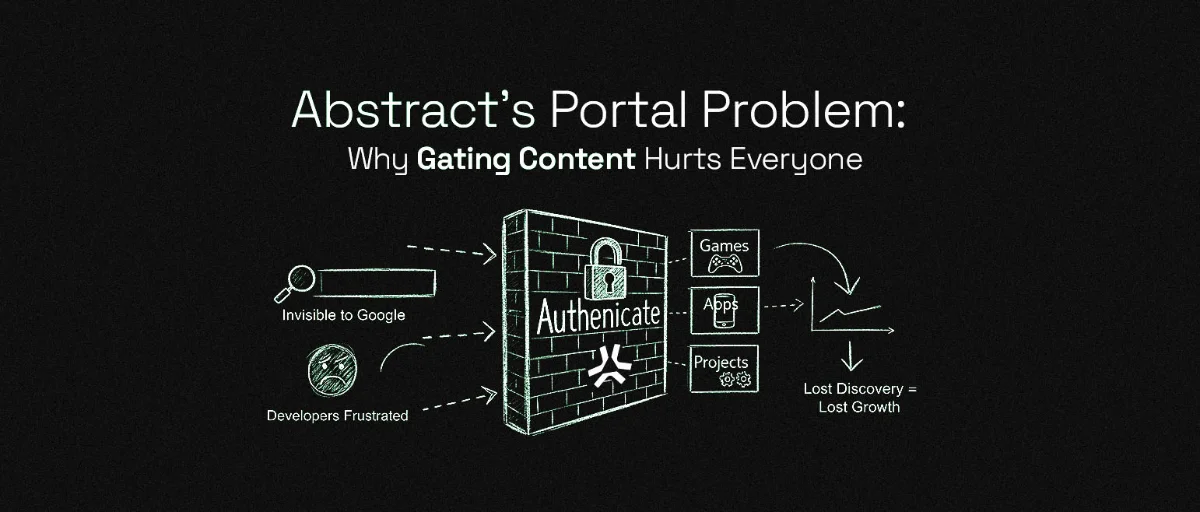
Imagine if Steam or the App Store locked every game preview behind a login wall—no browsing, no discovery, just a prompt to sign in. That’s basically what’s happening inside Abstract’s Portal right now.
After covering Abstract's discoverability issues with BIGCOIN, the problem runs deeper than individual projects. The Portal's authentication structure is making entire games, apps, and projects invisible to both search engines and the users trying to find them.
The Authentication Wall Problem
Here's the situation: Abstract's portal at portal.abs.xyz requires authentication before users can browse games and applications. Streams ARE publicly viewable at portal.abs.xyz/stream without logging in—which is a step in the right direction. But games, apps, and community tokens remain locked behind a login wall.
This creates a bizarre paradox: users can discover who's streaming but not what they're streaming or playing. When I searched "Abstract Portal Bigcoin" on Google, results showed streamer profiles instead of the game itself.
This means the actual applications and games building on Abstract are effectively invisible to search engines.
Three Critical Impacts
SEO Blackout
From a technical perspective, this authentication requirement is catastrophic for search engine optimization. Search engines like Google rely on crawling publicly accessible content to index and rank pages. When content is gated behind JavaScript-driven authentication, crawlers simply cannot see it. This isn't just about traditional search either—as mentioned in our previous article about BIGCOIN's discoverability challenges, AI agents and systems increasingly use search to index and find information about blockchain projects and applications.
As more users turn to AI assistants to discover Web3 projects, Abstract's ecosystem is being systematically excluded.
User Experience and Onboarding Friction
Consider this scenario: you're a streamer on Abstract playing an innovative new game. You want to share your stream with three friends who've never used Abstract before. Under the current portal configuration, those friends must authenticate immediately upon landing on the page just to watch your stream—except they can actually watch the stream itself since that's public, but they can't browse what game you're playing or discover other games in the ecosystem without signing in.
This creates friction at the exact moment you're trying to convert curious visitors. Traditional platforms like Twitch have solved this elegantly: anyone can watch streams and browse content anonymously, but authentication is required only when users want to interact, chat, or follow. This approach gives platforms time to build trust and demonstrate value before asking users to complete the psychologically significant task of creating a new account.
While Abstract uses social logins (Google, etc.) to reduce friction, the fundamental issue remains: you're asking users to commit before they can evaluate what they're committing to.
Discovery Dependency and Developer Tension
Perhaps the most significant impact is on the projects themselves. A majority of applications on the Abstract blockchain rely heavily—or even exclusively—on the portal as their primary discovery mechanism. When that portal is invisible to search engines and requires authentication for browsing, these projects face a severe disadvantage in attracting organic traffic.
This dependency has created what can only be described as a contentious relationship between the Abstract team and community developers. The Abstract team rightfully maintains strict approval processes to keep the portal free from scams and low-quality projects. This curation is necessary and valuable. However, the authentication wall adds an additional layer of invisibility that even approved, legitimate projects must overcome.
Developers are essentially being told: "Build on Abstract, get approved for the portal, but still remain largely invisible to organic discovery." This creates a challenging environment for innovation when even good-faith projects struggle to find their audience.
Ecosystem-Wide Consequences
The authentication requirement impacts everything. Community meme tokens that drive engagement and culture can't be discovered. New Web3 users can't explore Abstract's ecosystem without committing to an account first.
From a psychology perspective, people want to window-shop before they commit. They want to see what's available, what's popular, what's interesting—then decide if it's worth creating an account. The current structure asks users to buy in blind.
A Path Forward
The good news is this problem has a relatively straightforward solution that doesn't require Abstract to compromise its security or quality standards. The approval process for projects can and should remain rigorous. However, once a project is approved, it should be publicly discoverable.
Abstract has already demonstrated they understand this principle by making streams publicly viewable at portal.abs.xyz/stream.
This same approach needs to extend to games, apps, and other ecosystem projects. Make the content publicly browsable and searchable, while keeping authentication requirements for actual interaction, wallet connection, or participation.
The Abstract Landing page already features select apps. It just needs to lead to a real directory experience. Currently it redirects to authentication after hitting portal.abs.xyz/discover. Abstract needs to commit resources to making this page public and adding critical metadata for each listing.
This isn't about choosing between security and discoverability—it's recognizing that public discovery is the first step in the conversion funnel, not a security risk. Users should browse Abstract's ecosystem, read about projects, and make informed decisions before authenticating.
From an SEO perspective, this change would make Abstract's ecosystem dramatically more visible to traditional search engines and AI-powered discovery systems. Each game, app, and project would become an entry point for organic traffic rather than a dead end.
Looking Ahead
Abstract's technology and blockchain infrastructure remain promising, as evidenced by continued project development and community growth. However, infrastructure means little if projects built on it can't find audiences.
The portal's authentication wall represents a quick win—a relatively simple technical change that would dramatically improve discoverability, SEO, conversion rates, and developer satisfaction.
For projects building on Abstract: don't rely solely on portal discovery. Invest in your own SEO, build direct community channels, and create alternative discovery mechanisms.
For Abstract: public discoverability isn't a nice-to-have feature—it's a fundamental requirement for ecosystem growth in 2025 and beyond.
FAQ
Q: Can I browse Abstract streams without logging in?
Yes, Abstract allows public browsing of streams at portal.abs.xyz/stream without authentication. However, games and apps are not publicly browsable.
Q: Why does Abstract require authentication for game browsing?
While Abstract hasn't publicly stated their reasoning, authentication requirements are often used to encourage wallet connection and increase platform engagement metrics. This comes at the cost of discoverability and conversion.
Q: How does this authentication wall affect SEO?
Search engines can't index content that requires authentication to view. This makes Abstract's games and apps invisible to Google and other search engines, severely limiting organic discovery.
Q: Will Abstract change this authentication requirement?
Abstract hasn't announced plans to change their portal structure as of October 2025. However, community feedback and developer concerns may influence future decisions. 🤔
Q: What can developers do if their Abstract app isn't being discovered?
Developers should invest in their own SEO, build direct community channels on Discord and Twitter, and not rely solely on portal discovery. Creating landing pages outside the portal that are publicly accessible can help with organic discovery. Get listing on established dAPPs site to help with establishing authority. Reach out to me for help if you are a problem on Abstract.
Follow me on X for more in-depth Abstract coverage.